Sleep apnea secondary to PTSD VA rating, how the claim works
A sleep apnea secondary to PTSD VA rating is possible when the evidence shows that your service-connected PTSD caused your sleep apnea or made it worse. This is called secondary service connection, and it is described in 38 CFR 3.310. VA then rates the sleep apnea itself under diagnostic code 6847. This guide explains how the link works, what the rating levels look like in general terms, and why a medical opinion matters so much in these claims.
Important note
This guide is general information about 38 CFR 3.310 and 38 CFR 4.97 and is not medical or legal advice. MilitaryMedicine is an independent service and is not affiliated with the VA or the Department of Defense. Talk to your doctor about any sleep or breathing problem.
What secondary service connection means
Some conditions do not start in service but come from a condition that is already service connected. Under 38 CFR 3.310, VA can grant service connection for a condition that is caused by a service-connected condition, or that is aggravated by it, meaning made worse beyond its natural progress. For sleep apnea and PTSD, both paths can apply.
- Caused by: your PTSD led to the sleep apnea
- Aggravated by: your PTSD made existing sleep apnea worse
- In both cases, your PTSD must already be service connected or be claimed at the same time
What you need for the claim
A secondary claim usually needs three pieces of evidence. Missing any of them is a common reason for a denial.
- A current diagnosis of sleep apnea, usually confirmed by a sleep study
- A service-connected condition, here PTSD
- A medical opinion that links the two, called a nexus opinion
If your PTSD is not yet service connected, start there. Our va rating for ptsd guide explains how VA rates it, and our ptsd va disability rating guide covers each level.
The role of the nexus opinion
The nexus opinion is often the deciding piece. A medical professional reviews your records and gives an opinion on whether it is at least as likely as not that your PTSD caused or aggravated your sleep apnea. The reasons behind the opinion matter as much as the conclusion. A good opinion explains the medical reasoning, refers to your history, and addresses other possible causes, such as weight, age or other conditions. A short opinion without reasons tends to carry little weight.
- Ask the provider to review your full records
- Ask for an opinion on both causation and aggravation
- Ask the provider to explain the reasoning, not only the conclusion
VA may also order a C&P exam or a medical opinion from its own examiner. Our va c&p exam guide explains what happens there.
How VA rates sleep apnea
Sleep apnea falls under diagnostic code 6847 in the respiratory section of the rating schedule, 38 CFR 4.97. In general terms, the current levels look like this:
- 0 percent: sleep disordered breathing that is documented but causes no symptoms
- 30 percent: persistent daytime hypersomnolence, meaning ongoing sleepiness during the day
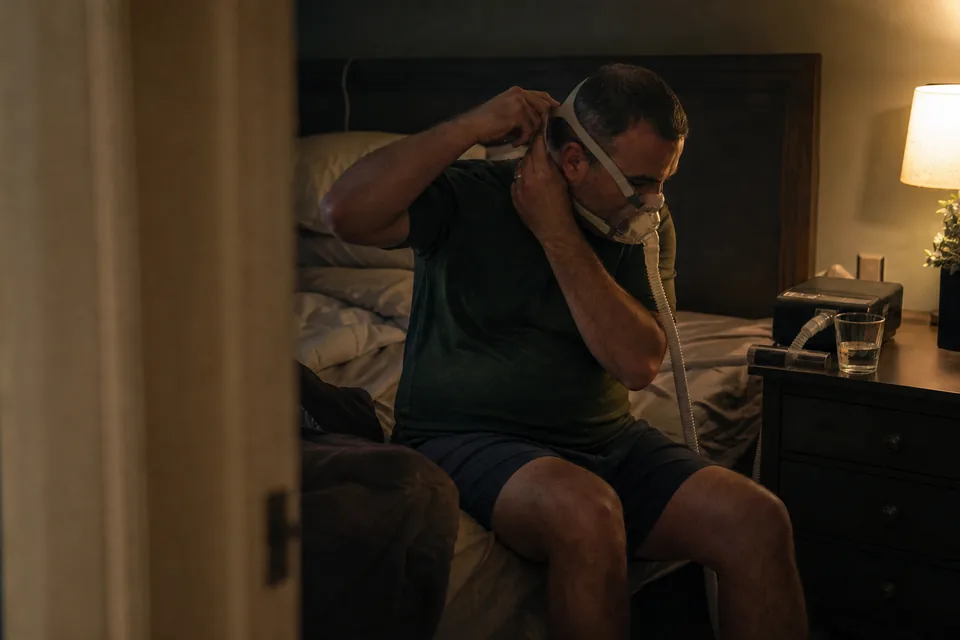
- 50 percent: the condition requires a breathing assistance device, such as a CPAP machine
- 100 percent: chronic respiratory failure with carbon dioxide retention or cor pulmonale, or a tracheostomy is required
How to prepare your file
A secondary claim is stronger when the records tell one clear story. Before you file, gather what VA will look for and check that each piece is in your file.
- Your sleep study report with the diagnosis and the date
- Records that show your CPAP or other device prescription, if you use one
- Treatment records for PTSD that mention sleep problems, nightmares or medication
- Statements from a spouse or roommate about snoring, pauses in breathing or daytime sleepiness
- The nexus opinion with its reasons
VA decides case by case
There is no automatic rule that PTSD causes sleep apnea. VA weighs the medical evidence in each file, and the outcome depends on the quality of the evidence, the opinions on both sides and your full history. VA has also proposed changes to the rating criteria for sleep apnea and other respiratory conditions. Rules can change, so check the current version of 38 CFR 4.97 and the latest updates on VA.gov before you file, and ask an accredited representative how any change affects a claim in progress.
Other secondary paths veterans ask about
Sleep apnea is sometimes claimed secondary to other conditions too, or as aggravated by medication taken for a service-connected condition. The same rule in 38 CFR 3.310 applies, and the same three pieces of evidence are needed. A representative can help you decide which theory fits your records best.
How the sleep apnea rating fits into your combined rating
A new secondary rating is combined with your other ratings using the whole person method in 38 CFR 4.25. VA does not add the numbers. For example, 50 and 30 give 65, which rounds to 70. Our va math guide shows each step, and the va combined rating calculator shows how a new rating could change your total.
Getting help with a secondary claim
Accredited Veterans Service Organizations (VSOs) help with claims at no cost. Accredited attorneys and claims agents generally may not charge you before VA issues an initial decision on a claim (38 CFR 14.636). After a denial or a low rating, a va disability claim attorney can review the medical evidence and the nexus opinion with you.